Trapstar: How Three Friends from West London Built a Global Streetwear Movement
Three mates. One mission. Zero fashion industry connections and a burning desire to dress differently from everyone else in Notting Hill — that’s where Trapstar began in 2005, and it’s still the only honest way to tell the story.
Mikey, Lee, and Will weren’t chasing funding rounds or pitching investors. They were solving their own problem — finding streetwear that actually represented West London’s raw, unapologetic energy. What started as competitive customisation between friends quickly turned into something nobody expected: a global cultural movement worn by everyone from Rihanna to Stormzy, backed by Jay-Z’s Roc Nation, and respected in streetwear circles from London to Milan to Tokyo.
The Name That Tells the Whole Story
The name didn’t come from a branding agency or a focus group. It came from a real conversation with Lee’s stepfather, who described the three founders as “hood celebrities trapped in the system.” Mikey pushed back immediately: “There’s a star trapped in all of us.” In that moment, both the brand name and its entire philosophy were born.
That phrase carries more weight than most mission statements ever will. It acknowledges struggle without romanticising it. It speaks to anyone who has felt limited by their circumstances but refuses to let those circumstances define them. That’s why the brand resonates from Brixton to Brera, from Manchester’s Northern Quarter to Naples’ centro storico. The feeling is universal. The hustle is universal.
Seen Everywhere, Found Nowhere
Between 2005 and 2006, not a single stockist wanted Trapstar on their shelves. The founders built their own distribution from scratch — customers ordered via MySpace, pieces arrived hand-delivered in pizza boxes and detergent cartons. Wild? Absolutely. But that “seen everywhere, found nowhere” mystique created genuine cult status long before Instagram turned underground cool into a mainstream algorithm.
The brand pioneered “Invasions” — guerrilla pop-up events appearing unannounced at undisclosed London locations, with strict purchase conditions and special pricing that turned shopping into an urban treasure hunt. Birmingham. Bristol. Manchester. Eventually New York. Community as marketing. Word of mouth as the only algorithm that mattered.
The tagline “It’s A Secret” wasn’t just copy — it was doctrine. An earned exclusivity built on genuine street connection, not paid magazine placement.
When Jay-Z Came Calling
In 2011, a Roc Nation A&R executive showed up wearing a Trapstar hoodie. Jay-Z noticed. Two years of conversations later, Trapstar became the first UK streetwear label signed to a major entertainment company — a milestone that confirmed what the streets already knew: this wasn’t hype. This was heritage.
What followed reads like a cultural highlights reel. Official merchandise designer for Rihanna’s Monster Tour. A Puma collaboration. The World Fashion Awards naming them Best Streetwear Brand in 2019, beating Supreme, Palace, Off-White, and Stussy in their category. Then Stormzy’s iconic Glastonbury performance, where Trapstar became one of the most talked-about fashion moments of the festival.
The critical detail through all of it? None of those celebrity associations were paid. Rihanna, A$AP Rocky, The Weeknd, Cara Delevingne — they wore the brand because they wanted to. That kind of authenticity cannot be manufactured, and it cannot be faked.
The Design Philosophy: Bold, Deliberate, Uncompromising
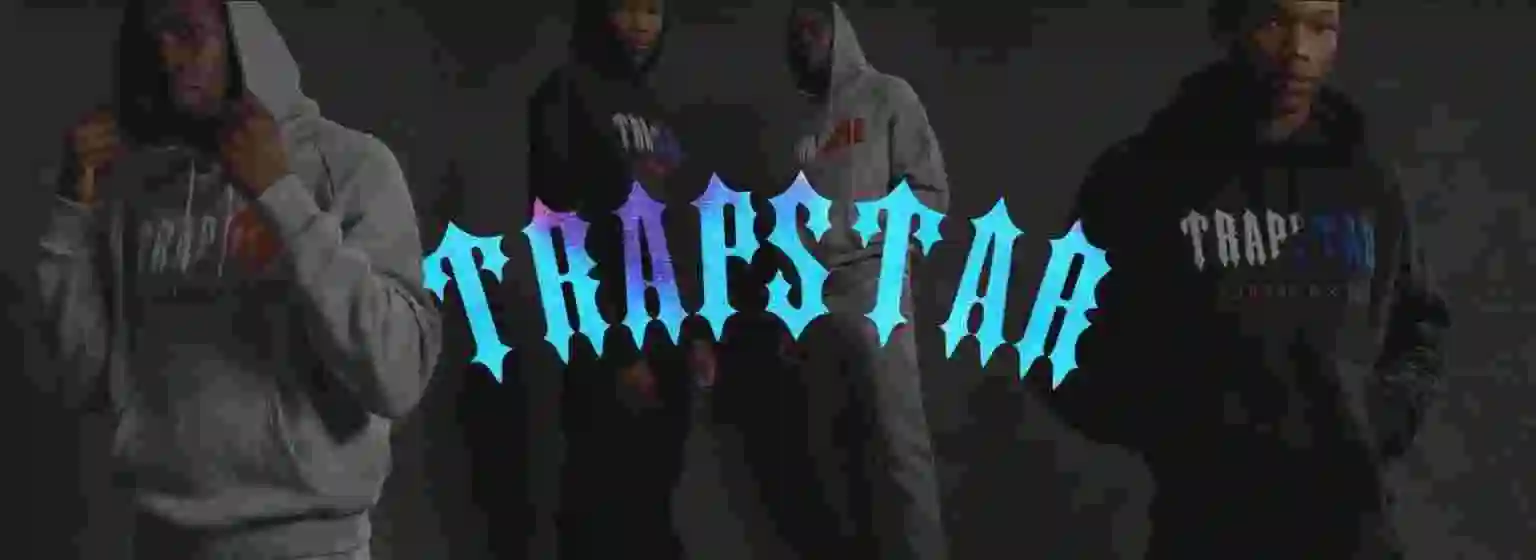
Trapstar’s aesthetic is immediately recognisable: the gothic Alcatraz logo, the Irongate motif, monochrome foundations punctuated by bold colour statements, oversized silhouettes designed for both comfort and visual impact. Nothing is throwaway here. Nothing chases a trend that will expire in six months.
The construction backs up the visual promise. Heavyweight fleece — typically 400GSM or above — maintains structure after 50+ washes. Double-stitched seams at stress points. Embroidery and graphic applications that don’t crack or peel with regular wear. Materials chosen deliberately for longevity, not just initial appeal.
The standout piece across all collections is the Tuta Trapstar — the coordinated tracksuit that has become the brand’s daily uniform. Wear it as a matching set for maximum impact, or split the pieces across separate outfits. The Shooters, Chenille Decoded, and Irongate Arch variations each bring a distinct personality within a consistent design language. Prices sit between EUR 120 and EUR 180, reflecting quality that lasts years, not seasons.
More Than Clothing — A Cultural Marker
Trapstar’s rise tracks directly alongside the explosion of UK grime and rap. When Skepta and Stormzy gained mainstream recognition, Trapstar was already in their wardrobes — not as a sponsorship, but as a genuine reflection of shared values. The brand and the music scene grew together, each lending the other credibility.
That cultural embeddedness means the brand carries meaning beyond aesthetics. Wearing it is a statement of understanding — you know the history, you respect the hustle. In cities where authentic culture and quality craftsmanship are non-negotiable — Milan’s Brera district, Rome’s Trastevere, Naples’ vibrant streets — that meaning transfers completely. Italy has always rewarded brands that put substance before spectacle.
Two Decades In, Still Uncompromised
Most brands that reach this level of success eventually drift. They chase broader audiences, dilute their identity, start making the compromises they once promised they would never make. Trapstar has not. Mikey, Lee, and Will remain the creative force behind every decision, and that continuity of vision shows in every new collection.
The philosophy established in a West London bedroom in 2005 still drives everything: quality over quantity, community over commerce, authenticity over hype. Pieces evolve season to season, but the soul stays consistent. That’s genuinely rare. That’s worth paying attention to.